Menstruation and Menopause: What to Expect
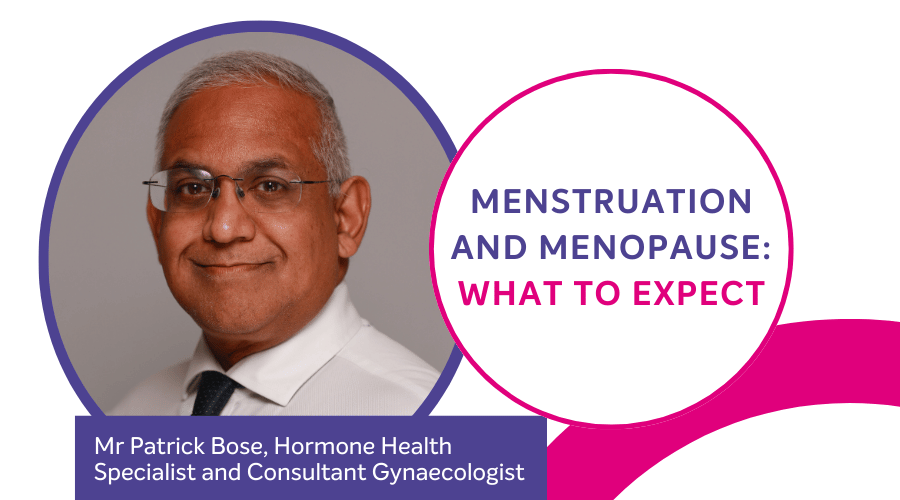
Menstruation and menopause are two defining milestones in a woman’s hormonal life. While one marks the beginning of reproductive years and the other signals their close, both are governed by the same finely tuned hormonal systems.
Understanding what happens in the body during the menstrual cycle and how these processes change as menopause approaches can help make sense of symptoms and treatment options.
At Hormone Health, Consultant Gynaecologist Mr Patrick Bose and our specialist team support women through every stage of hormonal transition, offering personalised guidance to improve well-being and quality of life.
Understanding the Menstrual Phase
Menstruation occurs when pregnancy has not taken place. Without a fertilised egg to nurture, the body no longer needs to retain the thickened uterine lining (the decidualised endometrium).
At the same time, the corpus luteum (a temporary structure formed after ovulation) stops producing progesterone. This sudden drop in progesterone causes the uterine lining to detach from the underlying muscle and be shed through the cervix.
Each month, approximately 80 ml of blood and tissue is expelled, usually around 14 days after ovulation. This process typically lasts 2–7 days. Uterine contractions help expel the tissue, and the passage of blood clots through the cervix can lead to painful abdominal cramping, commonly known as period pain. Once menstruation is complete, the endometrium begins rebuilding itself in preparation for the next cycle.
Consultant Gynaecologist Mr Patrick Bose emphasises that understanding this process is key to recognising what is normal for your body and when to seek support.
The Stages of the Menstrual Cycle
A regular menstrual cycle relies on the precise coordination of several hormonal events. Fundamentally, seven key stages must occur:
- The hypothalamus signals the pituitary gland to release FSH (follicle-stimulating hormone) and LH (luteinising hormone).
- FSH and LH stimulate the development of a viable ovarian follicle (egg).
- Ovulation occurs, releasing one dominant egg.
- Fertilisation does not occur.
- The corpus luteum fails, leading to progesterone withdrawal.
- The endometrium becomes decidualised (organised and structured).
- Menstruation expels the unused tissue.
If any of these stages are disrupted due to stress, hormonal imbalance, illness, or the natural changes of perimenopause, cycles can become irregular, heavier, lighter, or more symptomatic.
Mr Patrick Bose often works with patients experiencing irregular cycles to identify underlying hormonal imbalances and recommend personalised treatment strategies.
Ovulation and Progesterone: A Crucial Balance
Around the middle of the cycle, a surge of luteinising hormone signals the ovary to release its dominant follicle. This process, known as ovulation, sends the egg into the fallopian tube towards the uterus.
Some women experience mid-cycle pain, often referred to as ovulation pain. The egg remains viable for only 12–24 hours, during which fertilisation must occur for pregnancy to be established. If fertilisation does happen, the embryo implants into the uterine wall around five days after ovulation.
After ovulation, the empty follicle becomes the corpus luteum, which produces progesterone. Progesterone plays a vital role in preparing the uterus for pregnancy and regulating the menstrual cycle.
Progesterone levels peak around seven days before the next expected period, which is why a “day 21 progesterone test” is often used in a typical 28-day cycle. Levels above 30 nmol/L indicate successful ovulation.
PMS, PMDD, and Progesterone Sensitivity
While progesterone is essential, it can also be responsible for premenstrual symptoms. Many women experience:
- Anxiety or low mood
- Mood swings or irritability
- Anger or emotional sensitivity
- Abdominal bloating and fluid retention
- Skin changes
- Insomnia
- Poor concentration
In some cases, sensitivity to progesterone is so severe that it significantly affects mental health. This condition is known as Premenstrual Dysphoric Disorder (PMDD) and requires specialist support.
Conversely, progesterone supplementation can be highly beneficial in other situations. Clinically, it may be used to:
- Control irregular bleeding
- Support early pregnancy following IVF
- Reduce the risk of pregnancy loss after late miscarriage
Mr Patrick Bose and the Hormone Health team carefully assess progesterone levels and symptom patterns to personalise treatments for each patient and can help diagnose and treat PMDD.
Menstruation, Perimenopause, and Menopause
As women approach perimenopause, ovulation becomes less predictable. This leads to fluctuating levels of oestrogen and progesterone, often causing irregular periods, heavier or lighter bleeding, and worsening PMS-type symptoms.
Eventually, when ovulation stops altogether and menstruation ceases for 12 consecutive months, menopause is reached.
Clinically, hormonal balance can be supported using treatments that closely mimic the body’s natural hormones. These include:
- Body-identical oestrogens (such as oestradiol gels, patches, sprays, or creams).
- Micronised progesterone (such as Utrogestan capsules) or the Mirena IUS.
Lower doses of the same hormones found in combined oral contraceptive pills are also used in hormone replacement therapy (HRT) to relieve symptoms and improve quality of life during perimenopause and menopause.
Under the guidance of Mr Patrick Bose, patients receive personalised hormone assessments to determine the most appropriate, safe, and effective treatment plan.
How can we help?
Menstruation and menopause are part of a continuous hormonal journey. Understanding how the menstrual cycle works, and how it changes over time, empowers women to recognise symptoms, seek support, and make informed choices about their health.
If you’re experiencing troublesome menstrual changes, PMS, or menopausal symptoms, Consultant Gynaecologist Mr Patrick Bose and the Hormone Health team provide expert, personalised consultations to support hormonal balance and improve quality of life.
Book a consultation today and take the next step toward balanced, supported hormonal health.