New Research Reinforces the Bone Health Benefits of HRT During Menopause
Protecting bone health is one of the most important, yet often overlooked, aspects of menopause care.
While many women are aware that menopause can cause symptoms such as hot flushes, sleep disturbances and mood changes, fewer realise that declining hormone levels can also lead to decreases in bone strength, thus increasing the risk of osteopenia, osteoporosis, and fractures later in life.
New research presented at ENDO 2026, the annual scientific meeting of the Endocrine Society in the United States, has reinforced the important role that menopause hormone therapy (MHT), also known as hormone replacement therapy (HRT), can play in maintaining bone health after menopause. The findings showed that women using HRT were 69% less likely to have low bone mineral density compared with women who were not receiving hormone therapy.
These findings support the evidence, built up over many years, demonstrating that HRT can offer benefits beyond symptom relief, supporting long-term bone health and helping to reduce the risk of osteoporosis in appropriate patients.
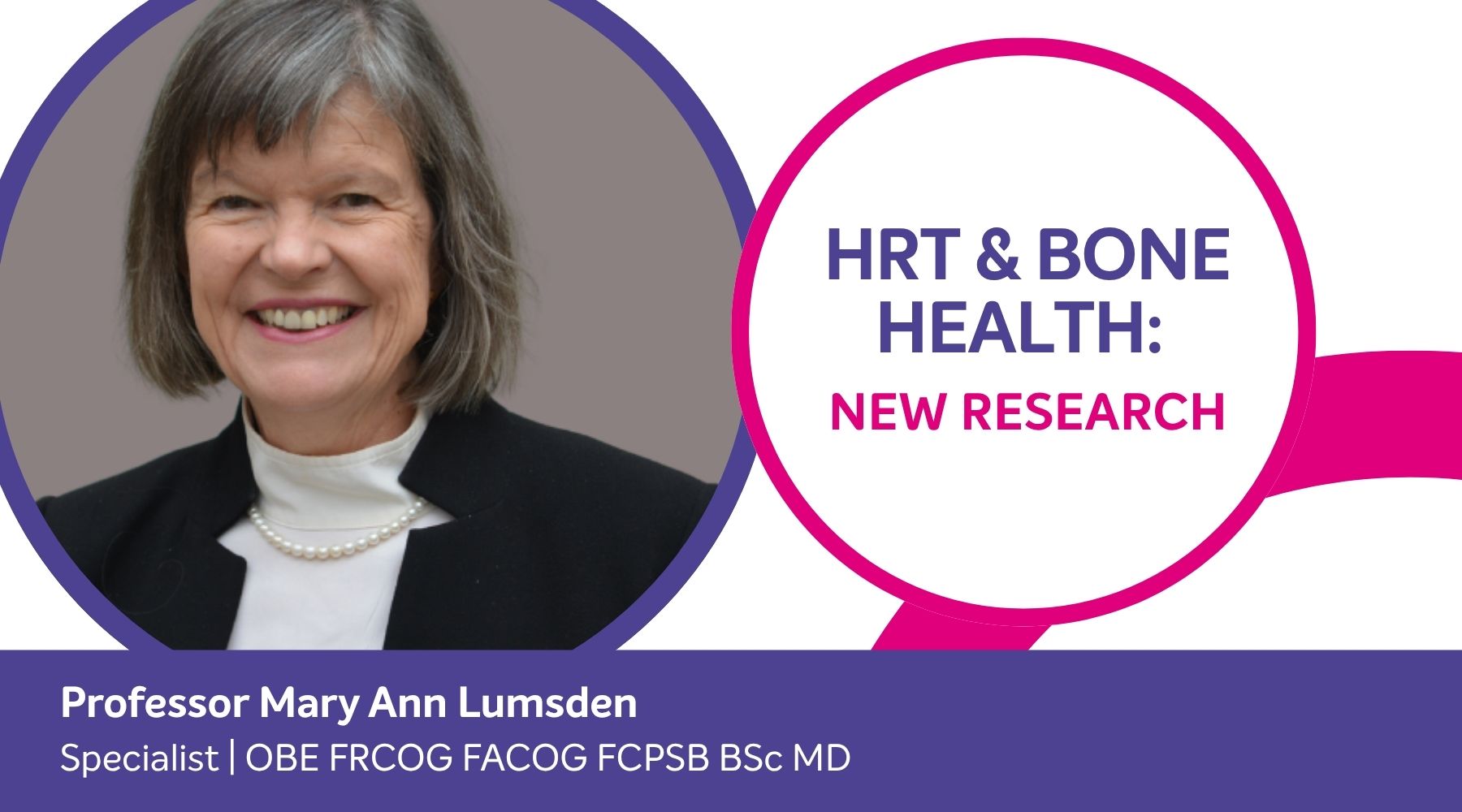
Hormone Health Specialist, Professor Mary Ann Lumsden, reflects on this new research and the importance of bone health during menopause, highlighting the need for women and healthcare professionals to consider bone protection as an important part of long-term menopause care, which, together with muscle strength and balance, decreases fracture risk.
Why Does Menopause Affect Bone Health?
Oestrogen plays a crucial role in maintaining healthy bones. Throughout life, our bodies continuously break down and rebuild bone tissue, with oestrogen helping to regulate this process and maintain a healthy balance.
As oestrogen levels decline during perimenopause and menopause, bone loss begins to accelerate. Over time, this can lead to reduced bone density, increasing the risk of:
- Osteopenia (lower than normal bone density)
- Osteoporosis
- Fragility fractures, particularly of the hip, spine, and wrist
Bone loss is often described as a “silent condition” because many women experience no symptoms until a fracture occurs.
What Did the Research Show?
Researchers analysed bone density data from postmenopausal women who had undergone DEXA bone density scanning.
The study found that women using menopause hormone therapy:
- Were 69% less likely to have low bone mineral density
- Had higher bone density measurements in both the hip and spine
- Continued to show benefits after adjusting for factors such as age, smoking status, vitamin D levels, and years since menopause
Whilst the research is awaiting peer-reviewed publication, the findings support existing evidence showing that HRT can play an important role in preserving bone health and reducing the risk of osteoporosis.
The Role of HRT in Bone Health
For many women, HRT is primarily considered for the management of menopausal symptoms. However, its benefits often extend beyond symptom control.
Current evidence shows that HRT can help:
- Slow the rate of bone loss
- Maintain or improve bone mineral density
- Reduce the risk of osteoporotic fractures
- Support long-term skeletal health after menopause
The International Menopause Society and other leading menopause organisations recognise the important role HRT can play in protecting bone health in suitable women.
As with any treatment, HRT is not appropriate for everyone, and decisions regarding hormone therapy should always be made following an individual assessment of symptoms, medical history, risk factors for side effects, and treatment goals.
Who May Be at Increased Risk of Osteoporosis?
Several factors can increase the likelihood of developing osteoporosis, including:
- Menopause and advancing age
- Early or premature menopause
- A family history of osteoporosis
- Low body weight
- Smoking
- Excessive alcohol consumption
- Low vitamin D levels
- Certain medical conditions and medications
Understanding your individual risk factors can help guide decisions around screening, prevention, and treatment.
Who Should Consider a DEXA Scan?
A DEXA (Dual-Energy X-ray Absorptiometry) scan is currently considered the gold standard for assessing bone mineral density and identifying early signs of bone loss.
A DEXA scan may be particularly beneficial if you:
- Are postmenopausal
- Have experienced an early menopause
- Have a family history of osteoporosis
- Have previously sustained a low-impact fracture
- Have concerns about your future fracture risk
- Are you considering HRT and would like to understand your baseline bone health
The scan is quick, painless, and provides valuable information about your bone strength and future risk of osteoporosis.
Understanding the Bigger Picture: Hormones and Bone Health
Bone health is influenced by more than just oestrogen levels.
Comprehensive blood testing can help assess other factors that may affect bone strength and overall wellbeing, including:
- Oestrogen levels
- Vitamin D status
- Thyroid function
- Nutritional deficiencies
- Markers of general health
Combining hormone assessment with bone density testing allows for a more personalised and proactive approach to menopause care.
How Hormone Health Can Help
At Hormone Health, we take a comprehensive approach to menopause and long-term health.
Our services include:
- DEXA bone density scans
- Comprehensive hormone and health blood testing if required
- Menopause consultations
- Personalised treatment plans
- Ongoing support and monitoring
Whether you are experiencing menopausal symptoms, concerned about osteoporosis, or considering HRT, our team can help you better understand your health and make informed decisions about your care.
Supporting Long-Term Bone Health
Maintaining strong bones is essential for preserving mobility, independence, and quality of life as we age.
The latest research presented at ENDO 2026 adds to growing evidence that HRT can play an important role in supporting bone health during and after menopause. Combined with appropriate screening, lifestyle measures, and personalised medical care, it will reduce the risk of osteoporosis and potentially fracture risk as well as protect long-term wellbeing.
If you would like to learn more about your bone health, discuss HRT, or arrange a DEXA scan or hormone assessment, the Hormone Health team is here to help.
More Details
Medical News Today’s ‘Menopause hormone therapy slashes risk of low bone density fractures: New data’ is available here.
Hormone Health support
Maintaining strong bones is essential for preserving mobility, independence, and quality of life as we age.
If you would like to learn more about your bone health, discuss HRT, or arrange a DEXA scan or hormone assessment, the Hormone Health team is here to help.
Professor Mary Ann Lumsden is a highly experienced Consultant Gynaecologist with more than 30 years’ experience caring for women with an extensive range of menopausal problems.
Arrange a consultation with Professor Lumsden.